> ## Documentation Index
> Fetch the complete documentation index at: https://learn.playlab.ai/llms.txt
> Use this file to discover all available pages before exploring further.
# Adaptive Memory
> Enable your Playlab applications to selectively remember important information
## What is this feature?
Adaptive memory allows your Playlab apps to selectively remember things you instruct it to remember, impacting future interactions users have with your app.
Using adaptive memory will change the way your app functions as it will include what it remembers into the chat.
## Rationale for the feature
This feature enhances the capabilities of your Playlab apps in several key ways:
* **More Natural Conversations:** AI will maintain context and have more coherent discussions
* **Better Understanding:** Enables AI to grasp nuanced meanings and references from earlier in the conversation
* **Improved Assistance:** Allows AI to build upon previous responses and refine its help based on user feedback
* **Context Awareness:** Helps AI understand when previous information needs to be updated or modified
## Watch how to use Adaptive Memory
How to configure and use Adaptive Memory
## How do I set up adaptive memory?
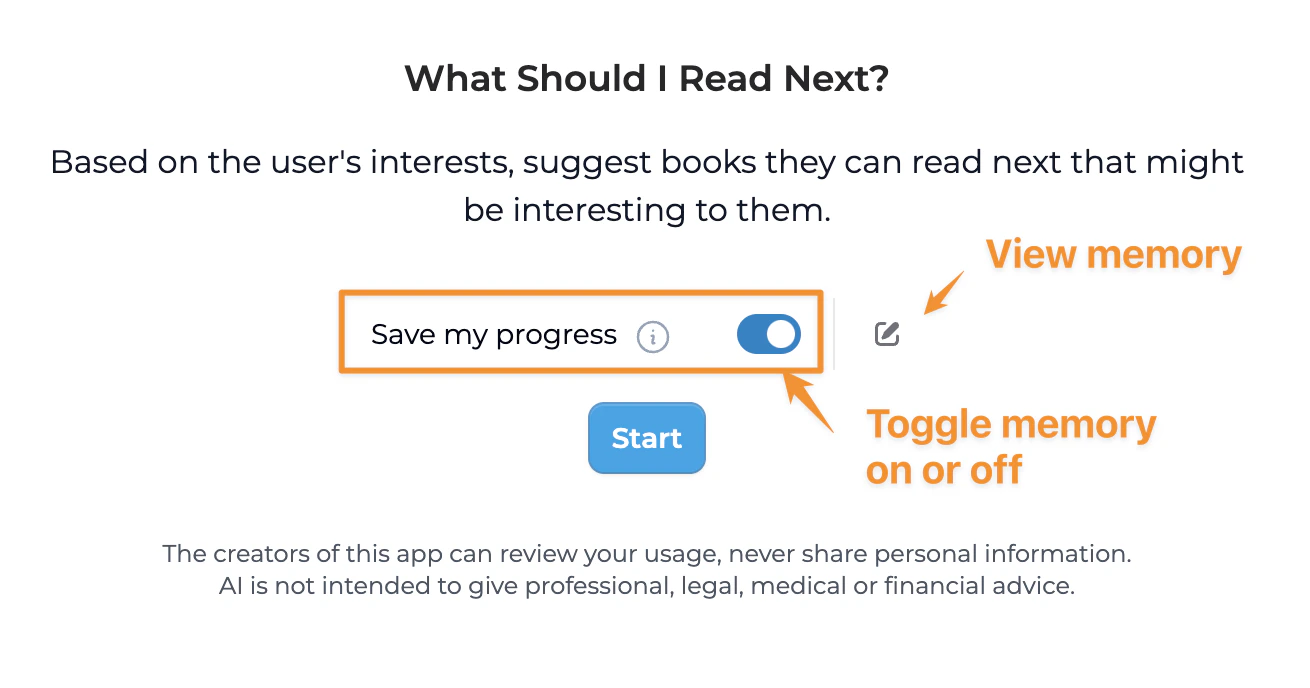
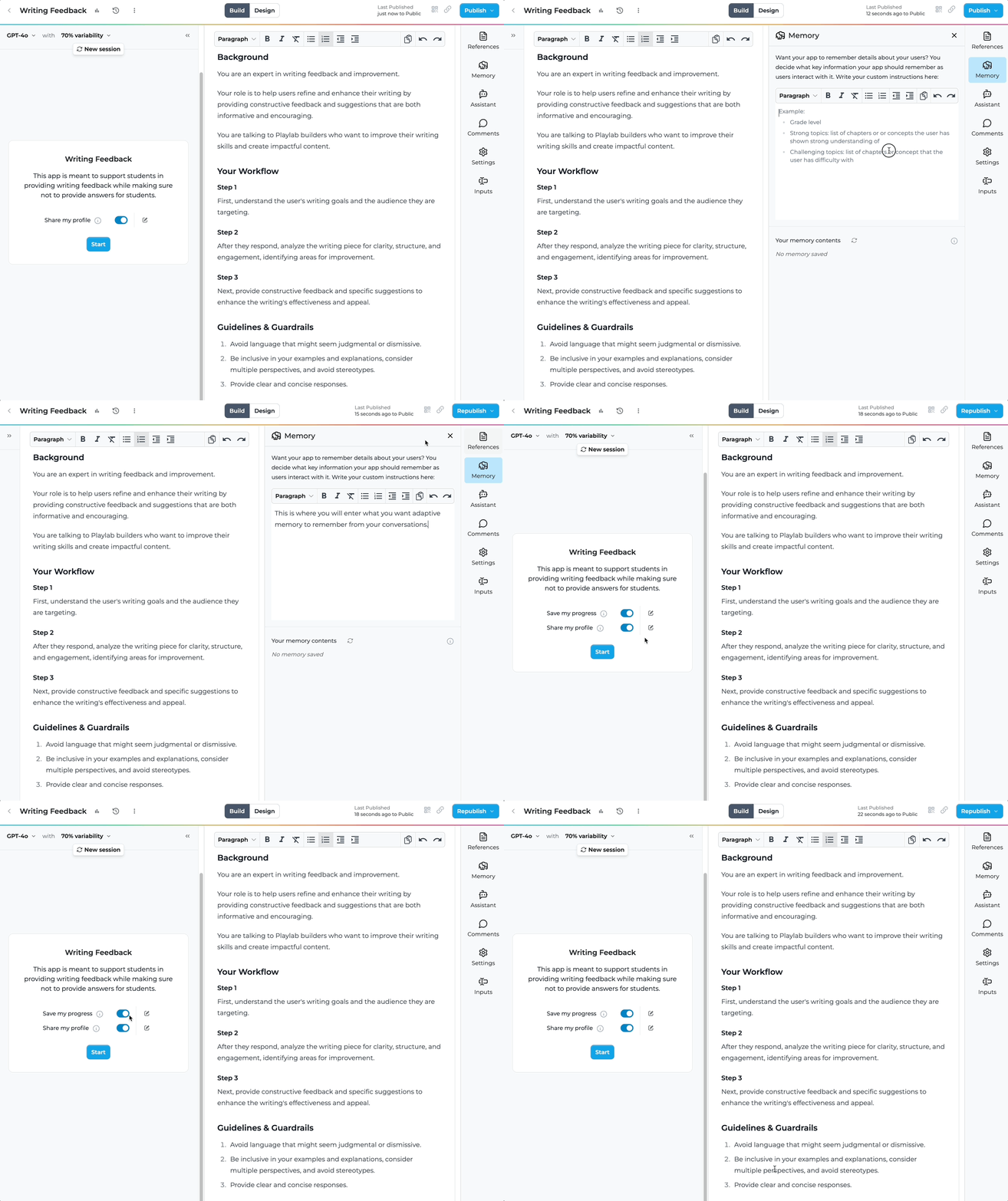 Enable the adaptive memory feature in your Playlab app settings.
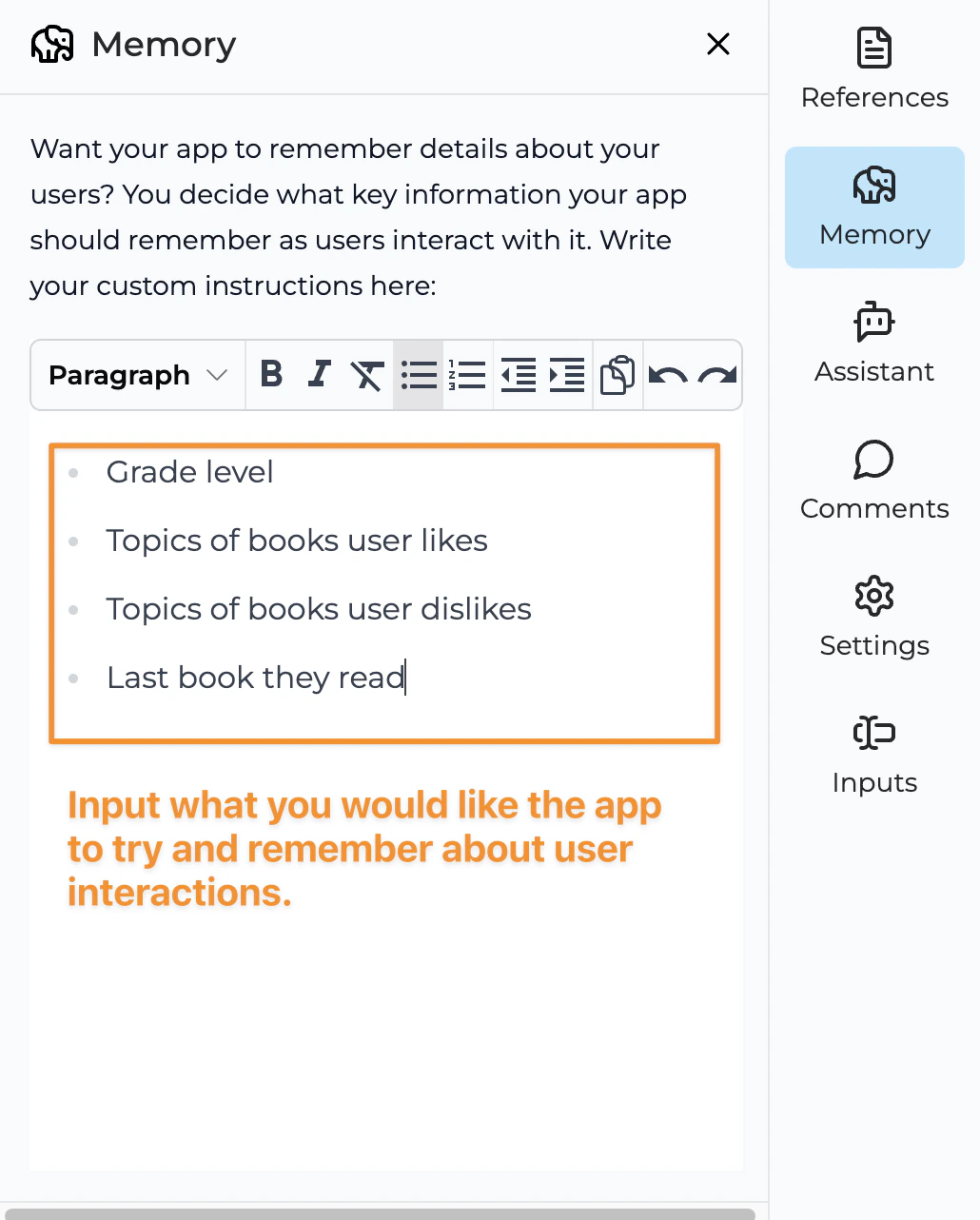
 Configure what you want your app to remember about your users.
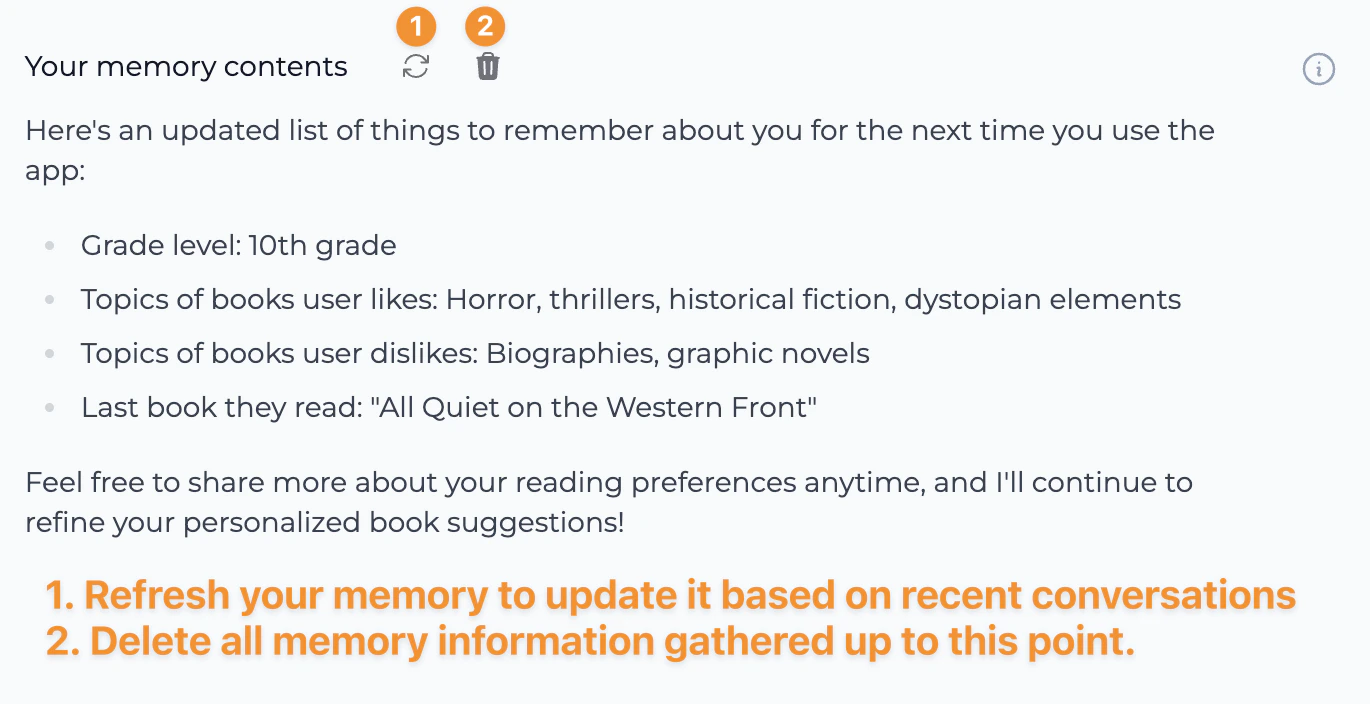
 View, refresh, or delete what your app remembers about users in the bottom panel.
 Don't instruct the AI to remember private or personally identifying information
## What should I include in memory instructions?
When creating memory instructions, consider including guidance for remembering:
Don't instruct the AI to remember private or personally identifying information
## What should I include in memory instructions?
When creating memory instructions, consider including guidance for remembering:
Description: Relevant details about the user that impact interactions.
Examples:
- Skill levels in relevant areas
- Learning goals or objectives
- Preferences for communication style
- Prior challenges discussed
Description: Important points from previous conversations.
Examples:
- Key decisions or choices made
- Problems that were previously solved
- Ongoing projects or tasks
- Feedback on previous suggestions
Description: Information relevant to your app's specific domain.
Examples:
- Subject matter preferences
- Industry-specific needs
- Technical requirements
- Specialized terminology used
Description: Information that helps track user progress over time.
Examples:
- Completed tasks or milestones
- Current stage in a multi-step process
- Areas where improvement was noted
- Ongoing challenges to address
## Example Memory Instructions
Here are some example memory instructions for different types of apps:
Memory Instructions: "Keep track of key academic details shared during discussions:
- Mentioned GPA and test scores
- Favorite subjects and areas of academic excellence
- Extracurricular activities and leadership roles
- Special talents or unique experiences that could impact college applications
Note personal preferences that emerge during conversations:
- Geographic location preferences (staying close to home vs. exploring new areas)
- Campus size and environment preferences (urban vs. rural, large vs. small)
- Social atmosphere interests (Greek life, sports culture, arts scene)
- Financial considerations and scholarship needs
Memory Instructions: "Remember information about the learner's language journey:
- Current proficiency level and areas of strength
- Specific vocabulary or grammar concepts they struggle with
- Learning goals (travel, business, academic, etc.)
- Preferred learning methods (conversation practice, grammar drills, reading)
Track progress over time:
- Topics or lessons already covered
- Mistakes that are frequently repeated
- Concepts that have shown improvement
- Cultural interests related to target language
Memory Instructions: "Remember key fitness information:
- Fitness goals (weight loss, muscle gain, endurance, etc.)
- Current exercise routine and frequency
- Physical limitations or injuries mentioned
- Equipment available for workouts
Track progress and preferences:
- Exercises the user enjoys or dislikes
- Recent achievements or milestones
- Changes in routine or intensity levels
- Nutritional considerations or dietary restrictions
## Tips for Creating Effective Memory Instructions
### Best Practices
Clearly define the categories of information your app should retain. Vague instructions may result in remembering too much irrelevant information or missing important details.
Not all information needs to be remembered. Focus on the details that will have the most significant impact on future interactions.
As your app evolves, revisit your memory instructions to ensure they're still capturing the most relevant information for your users.
Analyze how memory affects actual user interactions and adjust your instructions based on what works best in practice.
### Practical Applications
Remember learning progress, difficult concepts, and preferred explanatory styles to provide increasingly tailored educational content.
Track project stages, recurring tasks, and work preferences to offer more relevant assistance over time.
Remember stylistic preferences, past projects, and creative goals to provide more consistent and helpful creative guidance.
Track progress, habits, challenges, and preferences to provide more personalized support and recommendations.
## FAQ
While user profiles provide static information set up in advance, adaptive memory dynamically captures and retains information that emerges during conversations. Both features can complement each other for a more personalized experience.
Yes, your memory instructions guide what the AI remembers. You can also view, refresh, or delete stored memories in the management panel.
There are limits to how much information can be stored in memory. Focus on quality over quantity by instructing the AI to remember only the most impactful details.
Memory information is stored as part of your app's data. For specific privacy concerns, please refer to our privacy policy or contact support.
## Important Considerations
Be cautious about including Personally Identifying information in your memory instructions. Avoid instructing the AI to remember last names, addresses, contact information, and other sensitive information that you would not be comfortable sharing.
## We Want Your Feedback!
Have you created memory instructions that significantly improved your app's performance? We'd love to hear about it!
Contact us at [support@playlab.ai](mailto:support@playlab.ai)
***
Last updated: 03-23-2025